






6 min read A Step-By-Step Guide on How to Get Google AdSense Approval in 2024
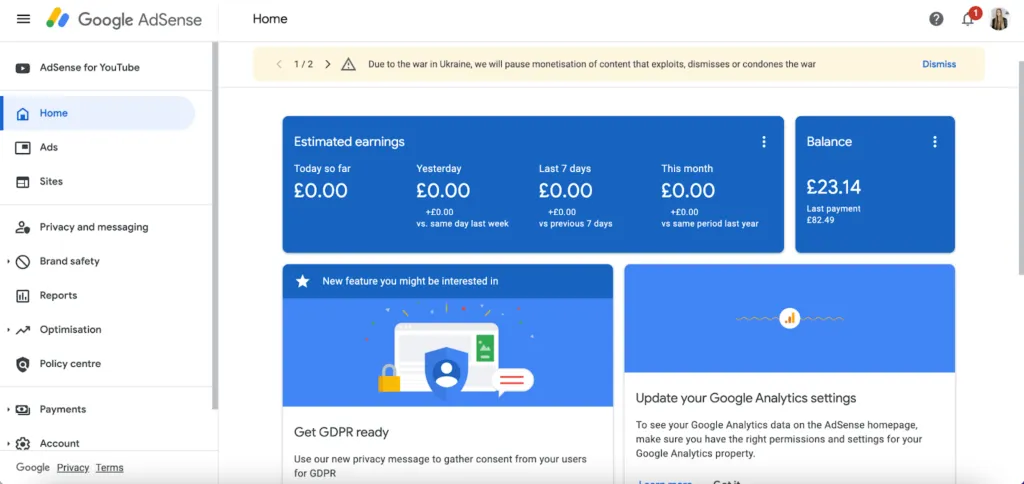
Google AdSense how is one of the most effective monetization strategies for website content by displaying relevant Google ads. Often, getting approval for an AdSense account can be a lengthy process, although certain measures can be taken to make getting approved easier, such as the site’s content and structure as well as the policies that are in place. In this article, I will provide you with a roadmap on how to get approval for your site in Google AdSense 2024.
Choose a High-Quality Niche
Google wants to ensure that the visitors to your site will benefit in some way from the information posted by you. As they say, it all begins with choosing a particular niche and providing your audience with high-quality content that will be both informative and interesting. Concisely, thin or duplicate content must be avoided as it is bad for SEO. It is important not to target certain topics such as politics, religion, and sex as they may deter the public from visiting the site or reading the content.
Create Original, In-Depth Content
Quality content of your site is a factor that determines approval of AdSense in your website faster. Develop unique, quality articles, reviews, and other content pieces. Make sure your articles are over 1,000 words so they offer updated content and insights for your readers. Some important points to remember are that it is possible to incorporate images, charts, and graphics to help the reader in visualizing the issues that are discussed in the text. Ensure that you thoroughly address the cover topics as a way of indicating a mastery of the subject under discussion.
Make Your Webpage Content More Search Engine Friendly
SEO makes it easy for Google to consider the content you submit and the target audience hence enhancing a faster approval of AdSense. In addition to the keyword research, the following tips should be followed: The use of Kansas popular and long-tail keywords in the title tags, URLs, content headings, image names, meta descriptions, and body text. Add outbound links to appropriate sources to enhance the value to users.
New content should therefore be published and promoted on a relatively frequent basis.
Google prefers not to witness a blog with only a few posts made all at once but a steady stream of content over time. Set a goal of 1-2 posts per week for better content production and to make followers wait for new materials. Ensure that the new and updated articles are shared on social media platforms and that internal links are used to draw the attention of both the users and the search engine crawler (Googlebot) to the assets.
Make Your Site Mobile-Friendly
The number of people using mobile devices to access the internet has grown tremendously and today statistics show that over 60% of the traffic generated from search engines is from mobile devices, hence having a mobile friendly website is compulsory. Ensure your site is compatible with a number of devices and use a responsive design and style. Make sure that pages take time to load the content, which is reachable easily and is compatible with small screens.
Provide information regarding the author as well as the contact details
Include the author’s bylines and a contact page to help Google review proficiency and reliability. Another benefit of an “About Us” page is that it’s a way to set up domain authority, where users recognize a source as an authoritative one. Ideally, it is best to paste profile pictures and detailed author information as much as possible.
Tackle Any Site Issues or Broken Links
Although the presence of site errors, broken pages, and dead links may not be fatal on its own, it remains a red flag for Google that may lead to a rejection of the site. It is recommended that all site functionality should be tested prior to application as it will be easier to identify the faults. Since Google would give you the raw data, be proactive by establishing monitoring to detect any tech problem before Google does.
Google Search Console is a free tool to help website owners and SEO professionals monitor and maintain the Google’s website index.
Google Search Console offers some of the most important metrics regarding your site’s visibility in Google. It also gives you the ability to pinpoint and correct crawl errors that, if left alone, could easily see your AdSense application rejection.
Submit Sitemaps
The use of sitemaps in your site helps Google in crawling all the pages of your site so that AdSense can then check for relevancy. Always create XML sitemaps for your site as well as image sitemaps and video maps where appropriate. Report them through Webmaster Tools or through Search Console.
Apply for an EIN
You will need your site’s tax ID number in order to get AdSense approval. Register for an Employer Identification Number (EIN) with the IRS if you have not registered for one yet. This links your site to your business organization since it is a method of storing your business name as a web address.
To be able to embrace the AdSense program policies, one has to read them carefully and understand every detail of them.
Here are some of the policies that Google has put in place concerning ads, the sites that host the ads and the ways in which the ads are to be utilized: Be sure that your site is clean as per their Webmaster Quality Guidelines and you should abide by their AdSense program policies strictly before applying.
If you follow through this checklist, then you can design your website to gain AdSense approval in the year 2024. Focusing on the content quality, effective SEO tactics, and the legal actions of the business as the way to increase Google AdSense revenue in the future.